


Looking for a proxy site list that still works? This guide ranks the best free proxy sites for web scraping in 2026, from open free proxy lists to free proxy server trials and managed APIs. Every one of these proxy websites was live-checked, so you can pick free proxies for web scraping that actually respond.
This guide ranks all three types of “free proxy,” since most articles blur them together and that’s part of why free proxy searches so often lead nowhere useful:
- Open proxy lists: free, public IP:port access, no signup. This is what most people mean by “free proxy.”
- Free trials from paid proxy providers: real proxy access, gated behind a signup or credit allowance.
- Free credits on managed scraping APIs: no direct proxy access at all; you call an API and the proxy layer stays invisible. This is where a proxy scraper tool like ScraperAPI fits.
This list ranks all three by how closely each one matches what “free proxy” actually means, then closes with the managed-API option for anyone who hits a wall with the first two.
What are the limitations of free proxies?
Free proxies can be tempting because of the price, but they come with real limitations. Free proxy providers often offer less stable, slower connections than paid options like residential or datacenter proxies, which can hurt your ability to scrape complex or heavily protected websites.
There’s also a risk most “free proxy” roundups leave out entirely: a proxy sits in the exact spot where it can read, log, or rewrite your traffic. See “Why free proxies are a security risk” below before you point one at anything that matters.
If your web scraping projects demand high performance, reliability, and the ability to bypass advanced anti-scraping measures, a paid proxy service or managed scraping API is usually the better choice.
Free proxy list at a glance
- Spys.one: worldwide localized proxies from 176 countries.
- ProxyScrape: easy-to-sort and filter list of free proxies.
- Free Proxy List: simple-to-use free proxy servers, plus an HTTPS-only view at sslproxies.org.
- Free Proxy World: a US-based, large free proxy pool.
- Proxyfy: free proxies for web scraping with API access.
- Proxy Nova: frequently refreshed free proxies.
- Geonode: advanced proxy listings and sorting options.
- ProxyDB: focuses on strong data security and protocols.
- Hidemy.name: frequently updated free proxy listings.
- Open Proxy Space: comes with a downloadable list of free proxies.
- Cyber Gateway: free SOCKS proxies, including SOCKS for Google.
- Free Proxy: simple protocol and anonymity filtering.
- Free Socks List: SOCKS5-only proxy list, checked every minute, with a free API and JSON/raw downloads.
Paid proxy networks with a free trial or free tier:
- IPRoyal: free proxy list alongside paid datacenter, residential, ISP, and mobile proxies.
- Webshare: free plan with a limited set of datacenter proxies.
- Decodo: 3-day, 100MB trial across residential, ISP, and mobile proxies.
- Bright Data: free trial with no credit card, on a full data-infrastructure platform.
- Oxylabs: enterprise-grade proxy network, trial available on request.
Managed scraping APIs with free credits:
- ScraperAPI: 5,000 credits on a 7-day trial, then a forever-free 1,000 credits.
- Apify Proxy: $5/month in free platform credits.
- ScrapeOps: 1,000 free requests plus 100MB residential, as trial credits.
- Scrapeless: no-credit-card free trial.
Searching for proxies to extract Amazon data specifically? You may want to check out these 10 best rotating proxies for scraping Amazon.
Best free proxy sites: the open proxy site list
These 13 proxy websites publish open free proxy lists: public IP:port addresses you can copy with no signup. Each entry below was live-checked and comes with a tip for getting more out of it.
1. Spys.one
Spys.one is a free proxy database offering access to IP addresses from 176 countries worldwide (updated from 171). As of this pass, the top three countries by proxy count are Russia, the United States, and France, each with roughly 770 to 800 proxies; some countries carry far fewer.
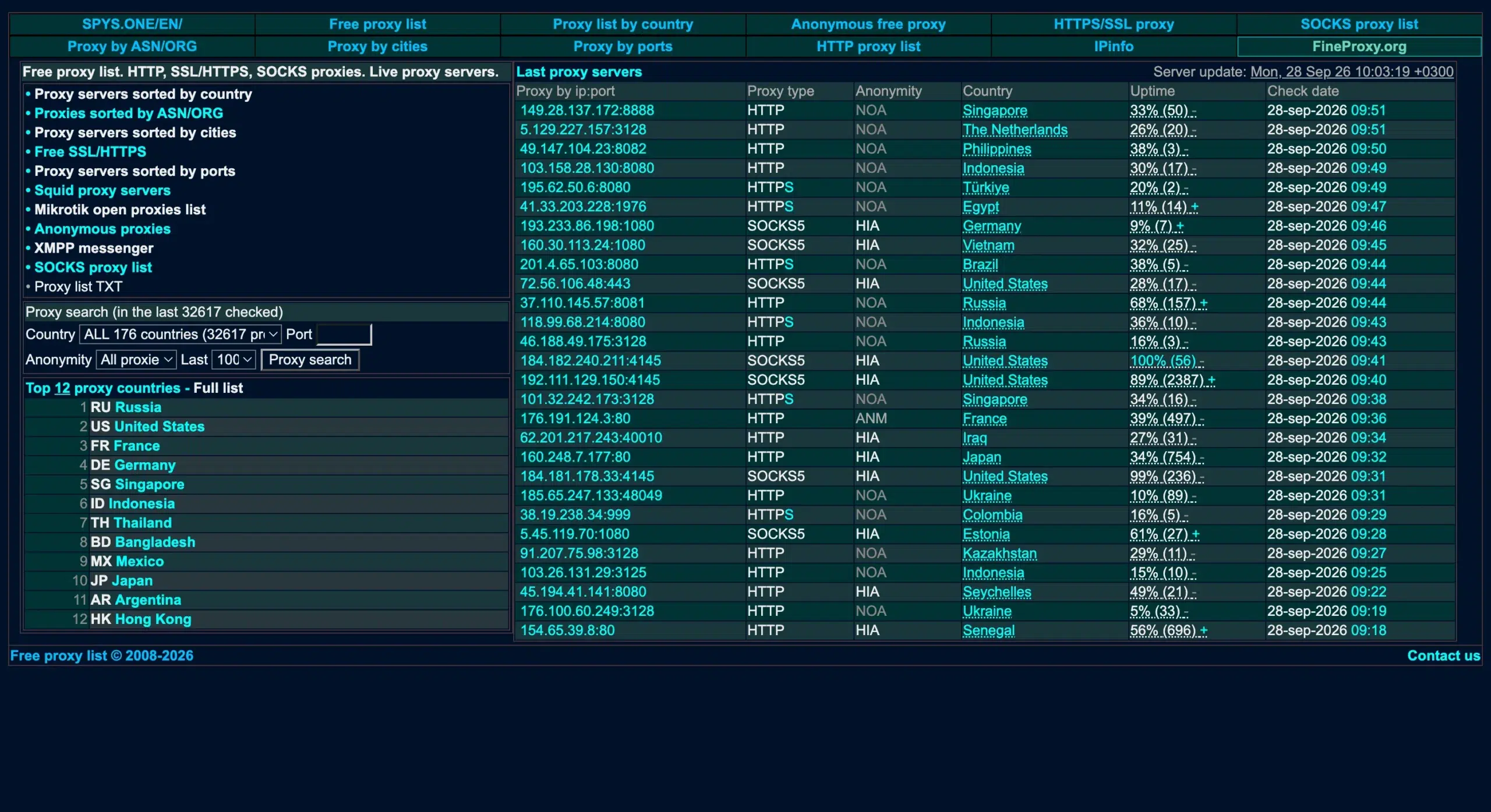
Spys.one categorizes its HTTP proxies by anonymity level, connection type (HTTPS/SSL or SOCKS), and other criteria. Live-checked uptime varies enormously proxy to proxy, from single digits to 100%, so there’s no meaningful “average” to quote; check each listing’s own uptime column rather than assuming consistency across the list.
Actionable tip: skip the homepage table and go straight to a country-specific URL, like spys.one/en/free-proxy-list/US/, to avoid scrolling past proxies you can’t use.
Pros
- Each listing shows a rating for latency, speed, and uptime.
- Uses load-balancing and optimized network protocols for more consistent session performance.
Cons
- Low number of IPs in some countries.
- The interface isn’t user-friendly, making the sorting and filtering options hard to follow.
2. ProxyScrape
ProxyScrape has a standard-fare list of free proxies with straightforward sorting by country, anonymity, and SSL. Coverage now spans 180+ countries (up from 30+), with the list holding 20,000+ live proxies at any given time, plus a free public API and GitHub mirror alongside the web table.
You can skip the web table entirely and call the API directly: https://api.proxyscrape.com/v4/free-proxy-list/get?request=display_proxies&proxy_format=protocolipport&format=text.
Swap format=text for json or csv if your script needs structured output.
Pros
- A “timeout” slider limits results to proxies meeting a chosen response-time threshold.
- A dedicated “Browse Free Proxy Countries” section lets you drill into a specific country by full name rather than a code.
- A paid tier adds rotating proxies and other advanced features for anyone who outgrows the free list.
Cons
- No free trial on the premium tier. You pay for the advanced features, which somewhat defeats the point of starting free.
3. Free Proxy List
Free Proxy List is one of the more accessible free proxy sites. It exclusively offers HTTP and HTTPS proxies, with filters for country, port, protocol, anonymity level, and uptime. Sorting by region or city still means manually scrolling through up to 38 pages.
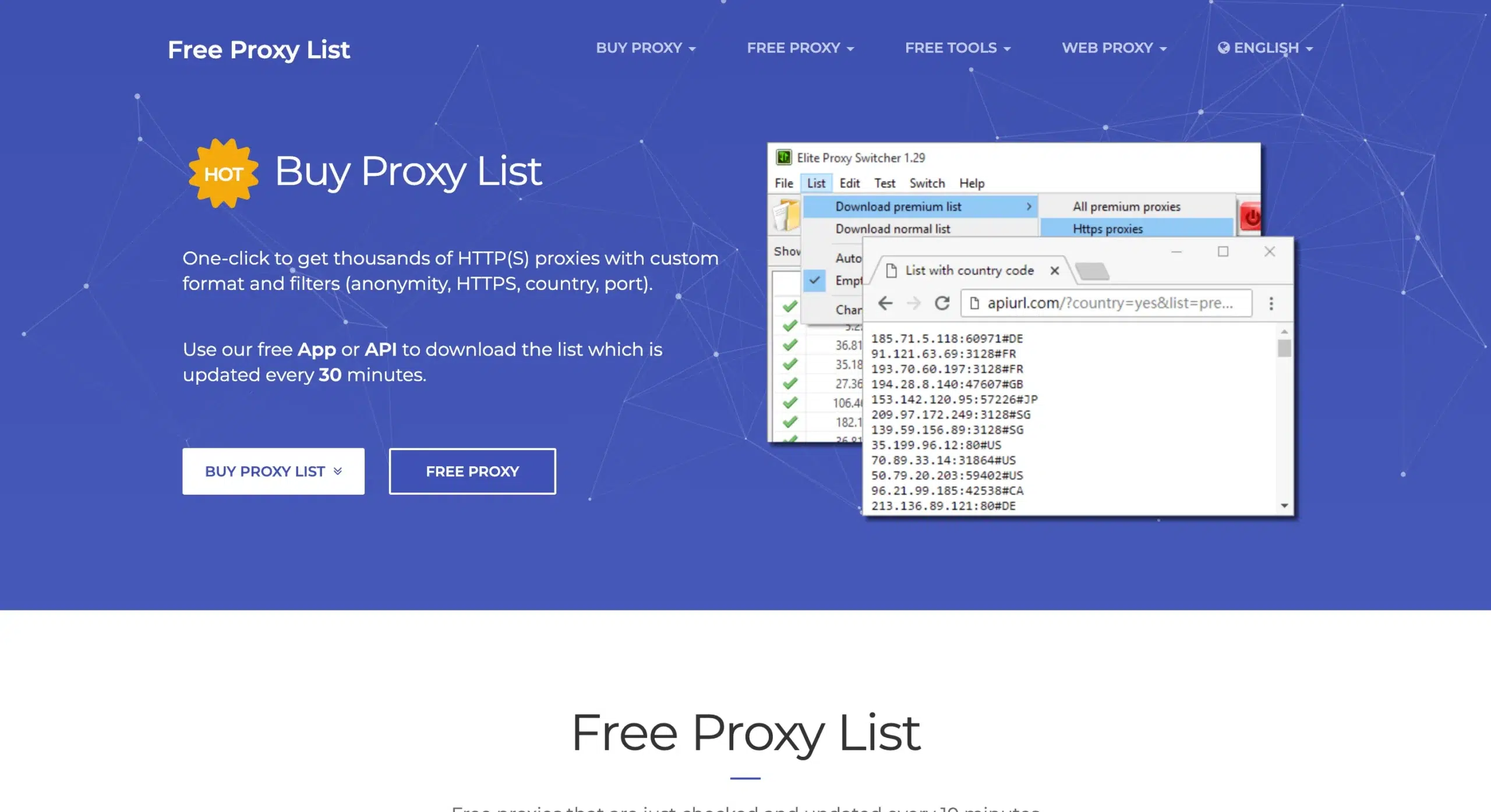
You can use the “Get raw list” button instead of copying rows by hand. It dumps the whole visible page as plain ip: port text in one click, ready to paste into a script.
sslproxies.org is the same site under another name: it redirects into free-proxy-list.net’s HTTPS-only filtered view, run by the same company (Didsoft). Its tagline promises HTTPS proxies checked every 10 minutes and live-checked; most listings are well within that window, with a long tail out to a couple of hours. If you need HTTPS support and nothing else, that view saves you from checking the HTTPS column on the main table by hand.
Pros
- Sort by country, anonymity, and SSL.
- Free app or API downloads the list, refreshed every 30 minutes.
- A separate HTTPS-only view (sslproxies.org) for anyone who needs SSL support and nothing else.
Cons
- Each listing shows response/transfer level as color bars only, no numerical values for direct comparison.
4. Free Proxy World
Free Proxy World offers a diverse range of proxies, sortable by type, anonymity level, country, port, and speed. Live-checked at the time of writing, the pool sits at 47,993 proxies, continuing the same upward swing from the 4,600 originally reported to 43,714 just one audit pass ago.
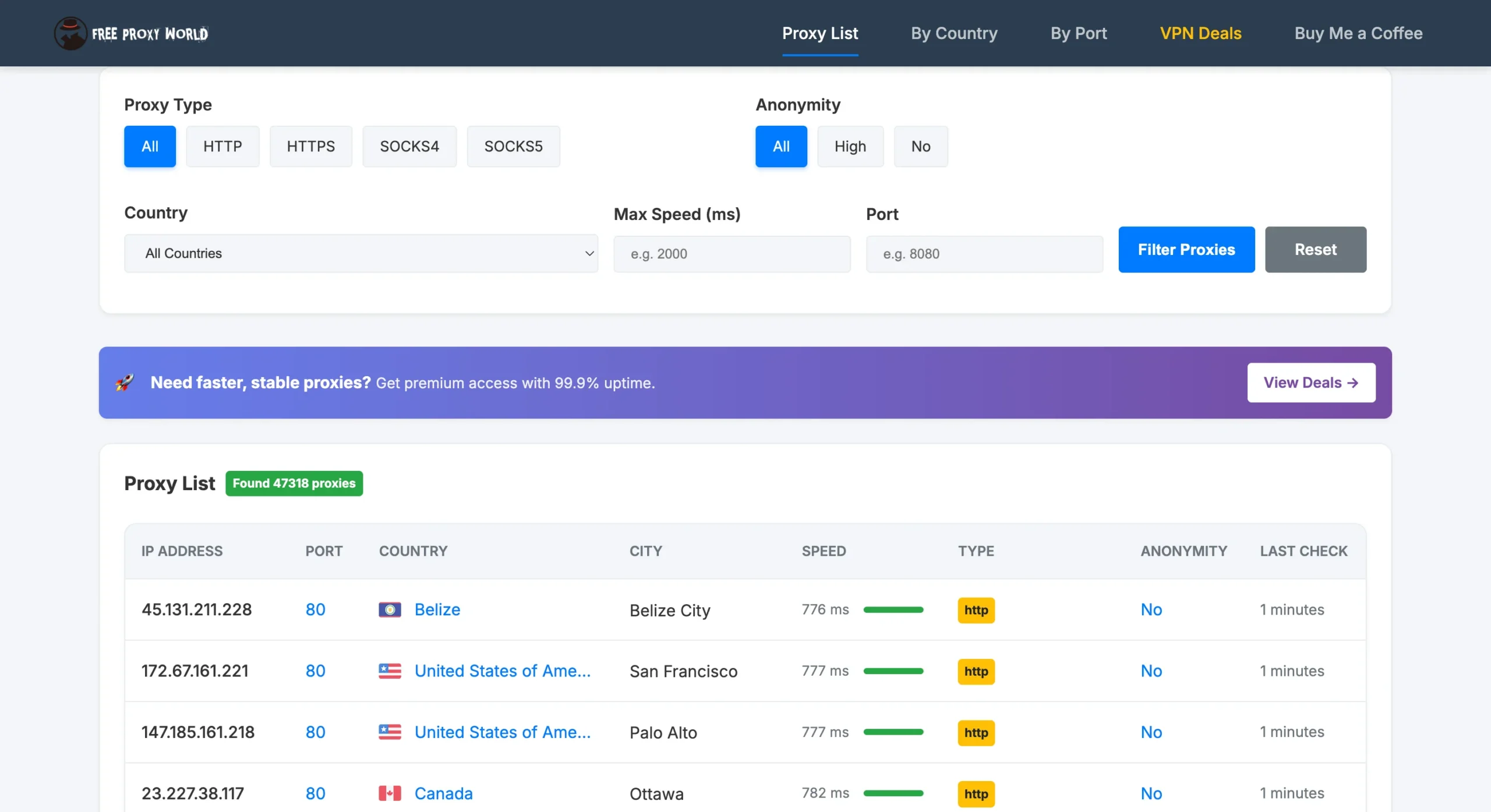
That swing is the point worth flagging: this list has been observed anywhere from ~4,600 to ~25,000 to ~43,700 to its current ~48,000, within the span of this article’s own revision history. Treat any single count as a snapshot, not a stable figure, and don’t expect consistently high performance even when the pool looks large.
Filter directly through the URL instead of clicking dropdowns, e.g. freeproxy.world/?country=US&type=http, which is faster if you’re scripting the pull.
Pros
- Large current pool with a strong concentration of US-based IPs.
- Transparent about anonymity level and last-check time.
Cons
- Pool size swings dramatically between checks; don’t plan around a specific count.
5. Proxify
Proxifly publishes a free proxy list that it refreshes every 5 minutes, pulling HTTP, HTTPS, SOCKS4, and SOCKS5 proxies from around the web. At the time of writing, its most recent update listed 2,785 working proxies from 111 countries, sorted by protocol and country. It’s one of the more developer-friendly options on this list: you can download proxies from the website, grab them straight from its public GitHub repository, or pull them into your code with its free NPM module.
If you’re scripting, skip the website and pull the list directly from Proxifly’s GitHub mirror, for example: https://cdn.jsdelivr.net/gh/proxifly/free-proxy-list@main/proxies/protocols/http/data.txt. Swap http for https, socks4, or socks5 in the URL to get a different protocol.
Pros
- Export to TXT, CSV, or JSON, with separate files for each protocol and country.
- Free NPM module and REST API for pulling proxies into your own code.
- Refreshed every 5 minutes, with no duplicates.
Cons
- The website tool caps free users at 100 proxies per request.
- The pool is smaller than big lists like Free Proxy World, and the count changes with every refresh.
6. Proxy Nova
Proxy Nova prioritizes recently checked addresses, with top-listed entries typically under a minute old. Speed, uptime, and location are all shown per proxy.
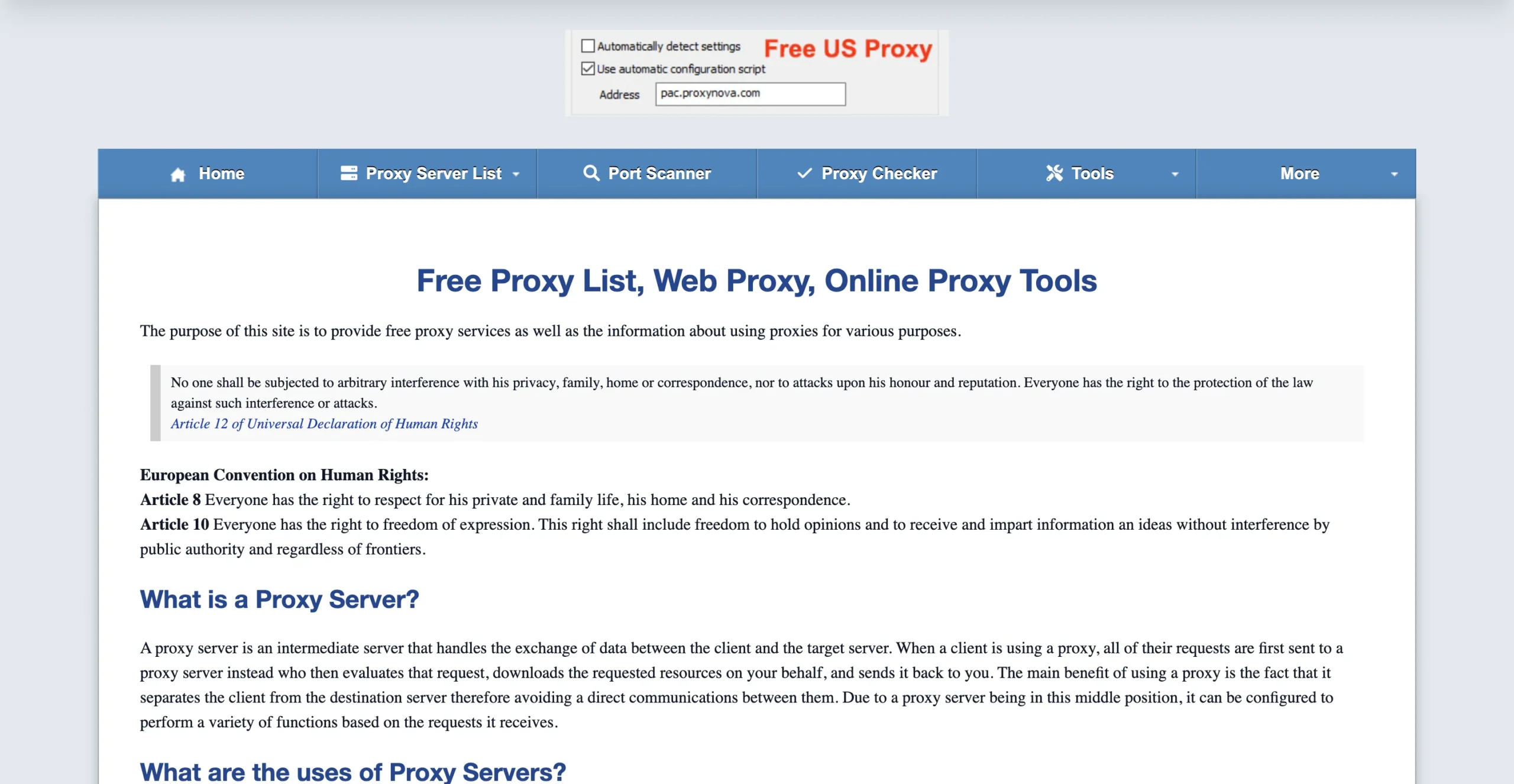
You can sort by the uptime column rather than taking list position as a freshness signal. Newest-checked isn’t always most reliable; a proxy checked 10 seconds ago can still have a poor historical uptime score.
Pros
- Manual refresh keeps focus on the freshest entries.
Cons
- Sorting is limited to country and anonymity.
- Total pool size isn’t disclosed.
7. Geonode
Geonode’s free proxy list has one of the more polished interfaces on this list, with easy scanning, sorting, and selection. It hosts 7,355 proxies across 103 countries, a live, rotating count that has shifted noticeably even across this article’s revision history (previously reported as 6,500+, then ~5,567), so treat any specific figure as a snapshot rather than a stable number.
Use the “Load proxies through a URL” feature to get a live, pre-filtered list back as a single API call, rather than scraping the rendered table yourself.
Pros
- Sorting by country, port, protocol, speed, and more.
- A paid upgrade path exists for larger volumes, starting around $5k for 10 TB.
Cons
- The free list’s data volume is smaller than several other entries on this page and shifts frequently.
8. ProxyDB
ProxyDB emphasizes data security with strong protocols and gives detailed per-proxy information, including uptime, RTime, and last-checked time. Live-checked at the time of writing, the list holds 6,145 total proxies, a figure the site actually discloses on the listing page itself, contrary to earlier reporting that it didn’t.
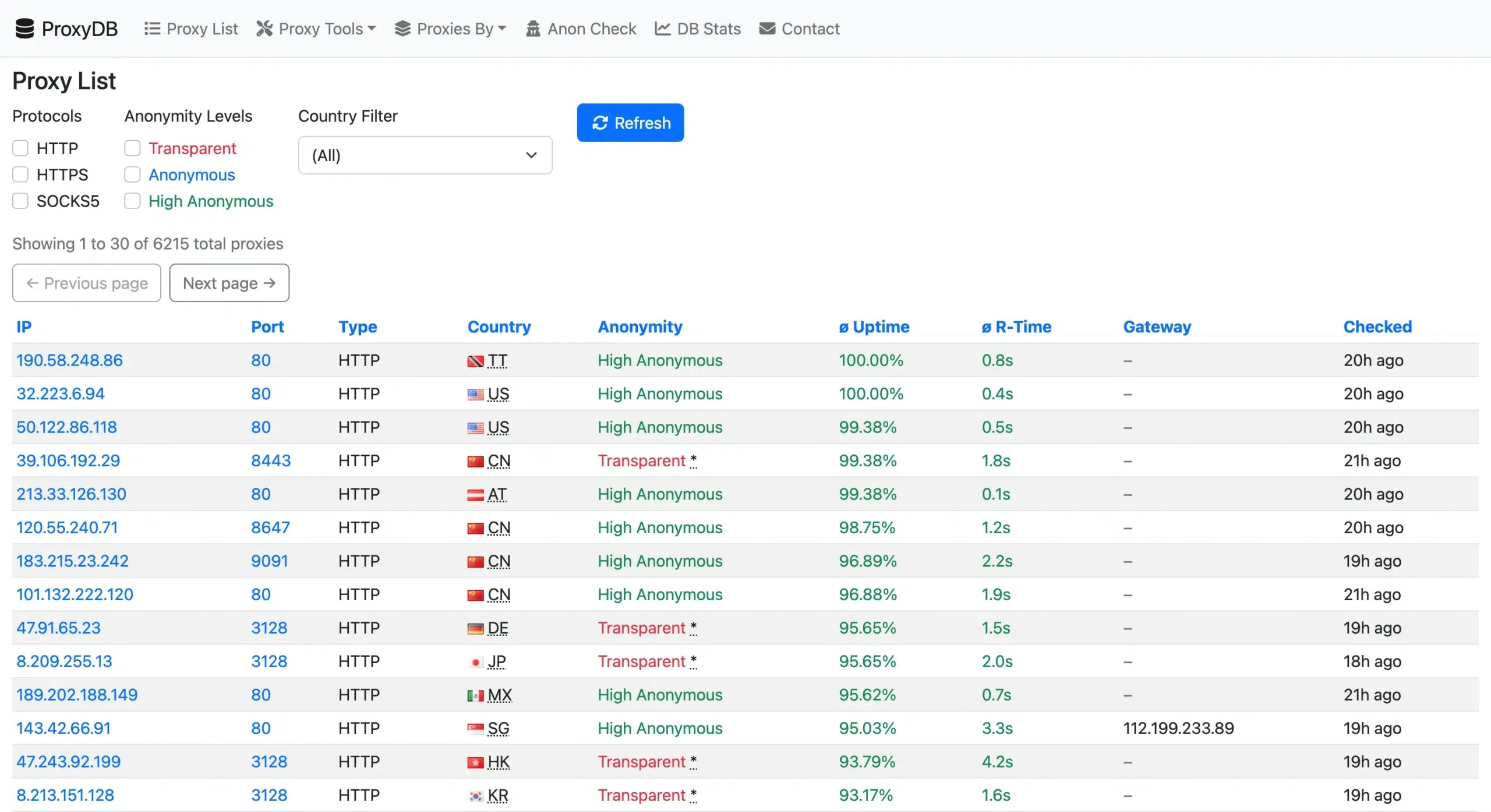
Browse by ISP or ASN (proxydb.net/by_isp) instead of by country alone if you need to avoid specific hosting providers that are already flagged by your target site.
Pros
- Uptime performance is mostly in the 80 to 100% range, with per-proxy figures rather than one aggregate number.
- Per-proxy last-checked timestamps rather than one aggregate figure.
Cons
- It lacks customization options and dedicated servers, which may matter for users wanting advanced features.
- Last-checked times range from about 2 hours to several days old, so don’t expect real-time freshness across the whole list.
9. Hidemy.name
Hidemy.name is a proxy website with a user-friendly interface, minimal data collection, and frequent data erasure for anonymity. Live-checked via ScraperAPI, its free list currently spans 81 countries and roughly 16,900 proxies total, a healthy pool size that wasn’t previously called out. Its streaming capabilities fall short for geo-restricted content.
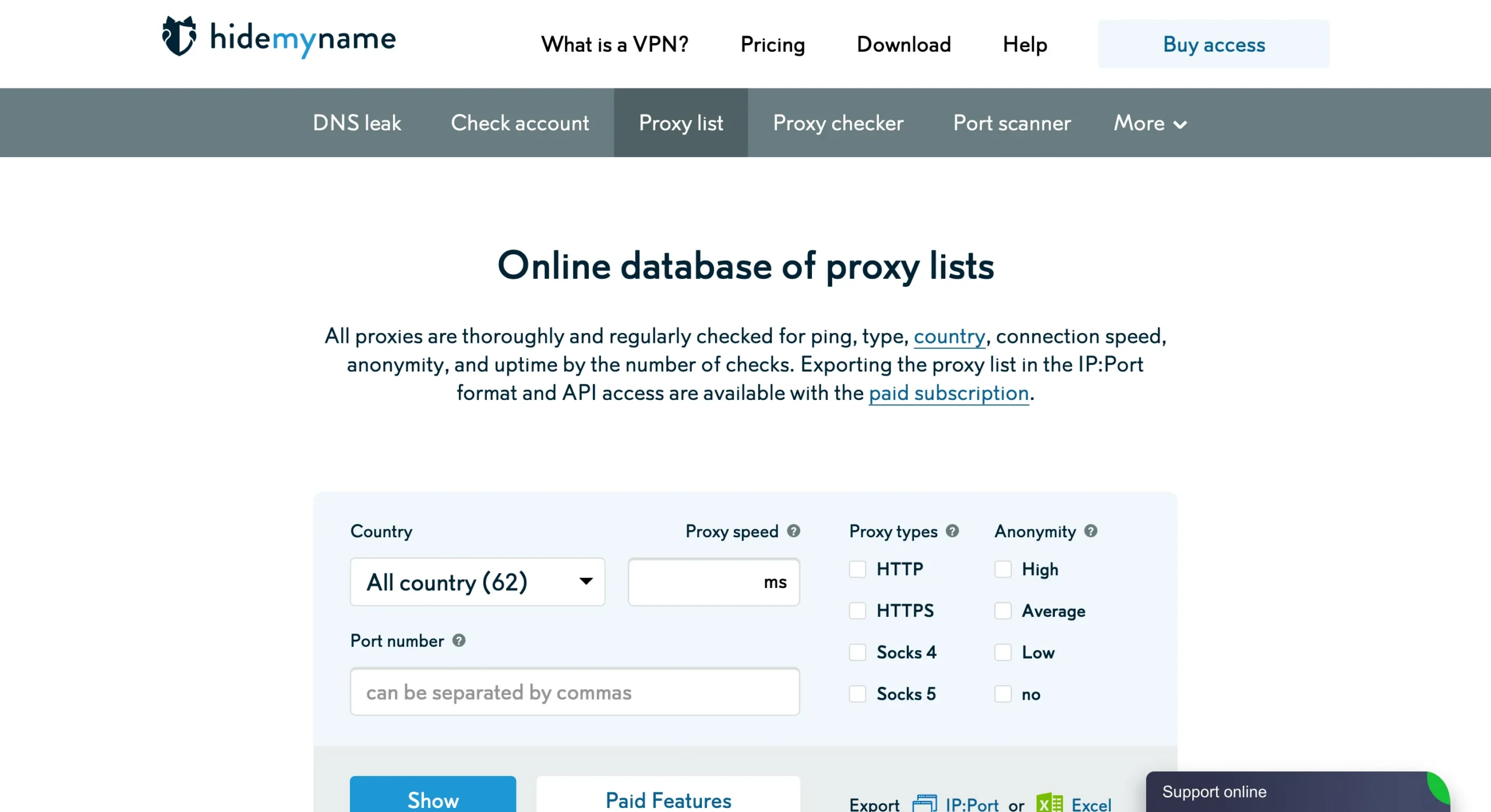
The country dropdown filters the table in place, with no page reload, which makes it fast to compare two or three specific countries back to back.
Pros
- Proxies checked for ping, type, speed, and uptime.
- Sort and search by country, speed, port, and anonymity.
Cons
- 81 countries is a modest footprint next to Free Proxy World’s tens of thousands of IPs.
- Exporting to IP:Port or Excel requires a paid plan.
10. Open Proxy Space
Open Proxy Space presents free proxy lists in downloadable .txt batches, each labeled by creation date, timeout, and privacy level, with only active proxies at the time of creation. Users can include or exclude specific countries before exporting.
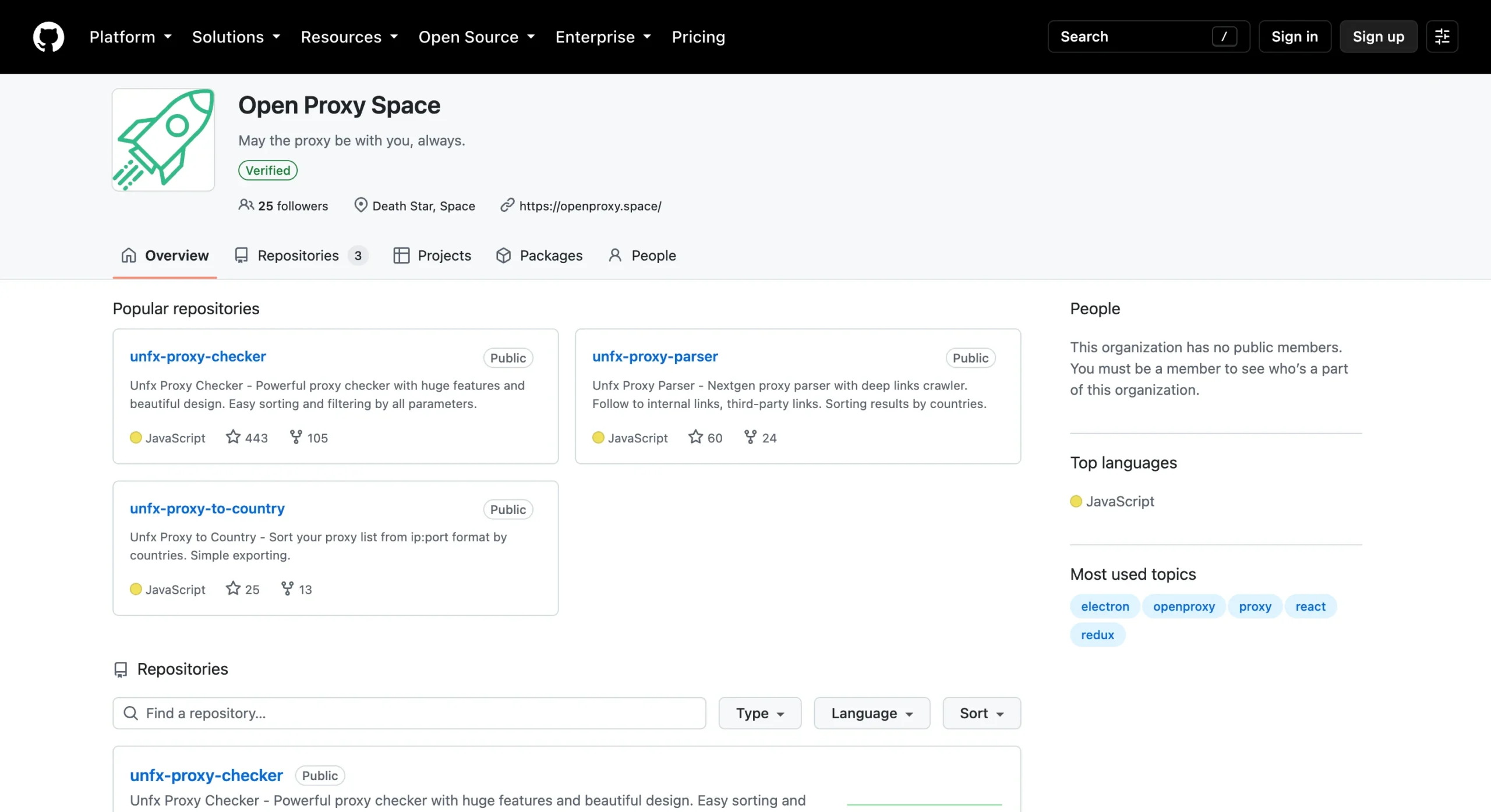
One technical note: ScraperAPI’s own scrape tool returns an HTTP 500 error against openproxy.space/list, consistently, across repeated attempts. This doesn’t necessarily mean the site is down for a regular browser, but it does mean this particular entry couldn’t be independently verified the way the others on this list were.
Pick the most recently created batch, not the largest one. Batch age matters more than batch size here since every listed proxy was only confirmed live at creation time.
Pros
- Paid members get custom API scripts, ports, and more.
- Lists are freshly checked at creation time.
Cons
- A relatively low proxy count.
- Free sorting options are limited compared to the paid tier.
- Could not be independently verified in this audit; the site errored out on every scrape attempt.
11. Cyber Gateway
Alongside its paid proxies, Cyber Gateway runs a free listing split into three categories: free HTTP proxy, free SOCKS proxy, and free SOCKS proxy for Google. The free pool is small, and the country mix changes day to day, so treat any specific country list as an example rather than a fixed roster.
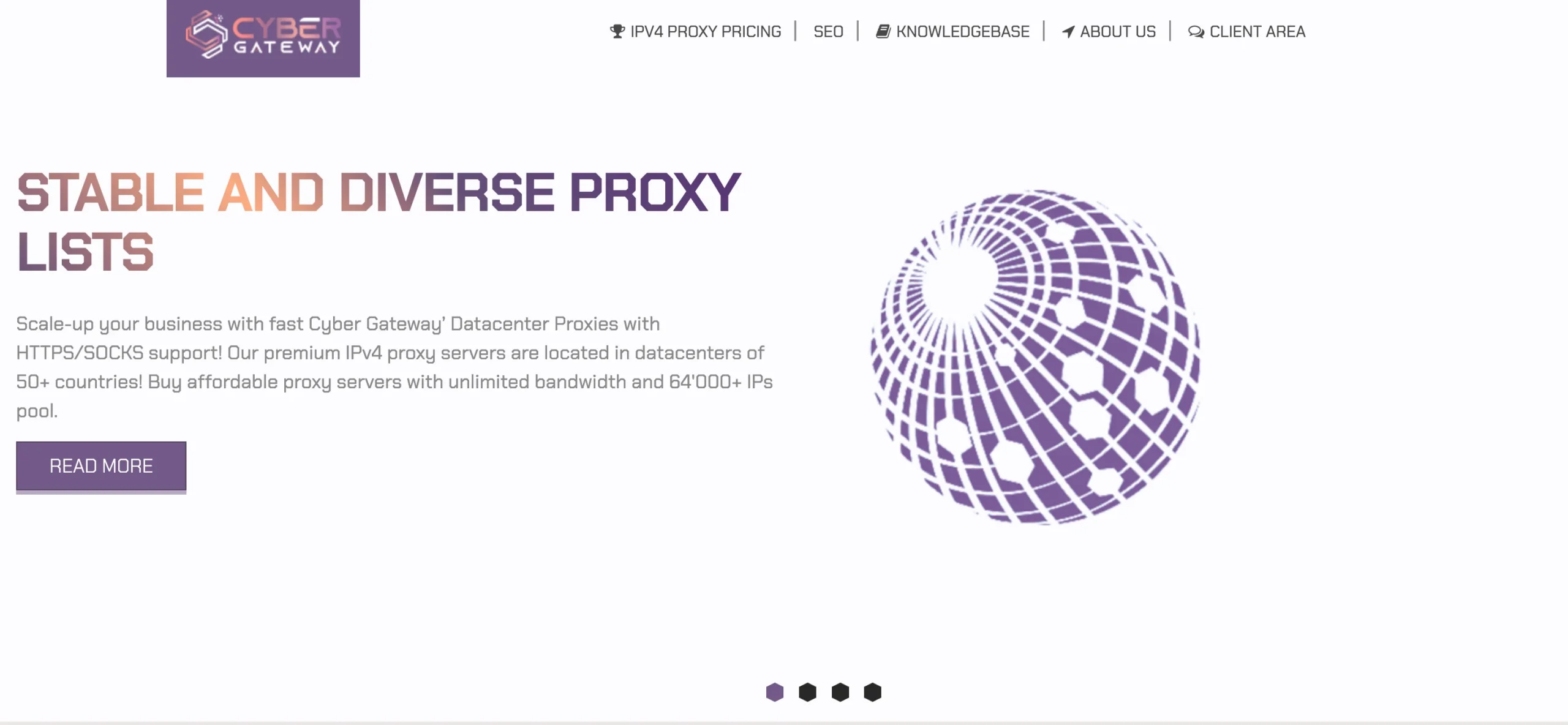
If your target is specifically Google (search, ads verification, etc.), use the dedicated “free SOCKS proxy for Google” tab rather than the general HTTP list. It’s pre-filtered for that use case.
Pros
- Manual refresh keeps focus on specific proxies.
Cons
- Sorting is limited to country and anonymity.
12. Free Proxy
Free Proxy is a free proxy server list with a user-friendly interface and protocol filtering (HTTP, HTTPS, SOCKS4, SOCKS5) and anonymity levels (elite, transparent). Its pool has dropped sharply, from a previously reported 17,000+ down to roughly 2,484 as of this pass, which is worth knowing before you plan around it.
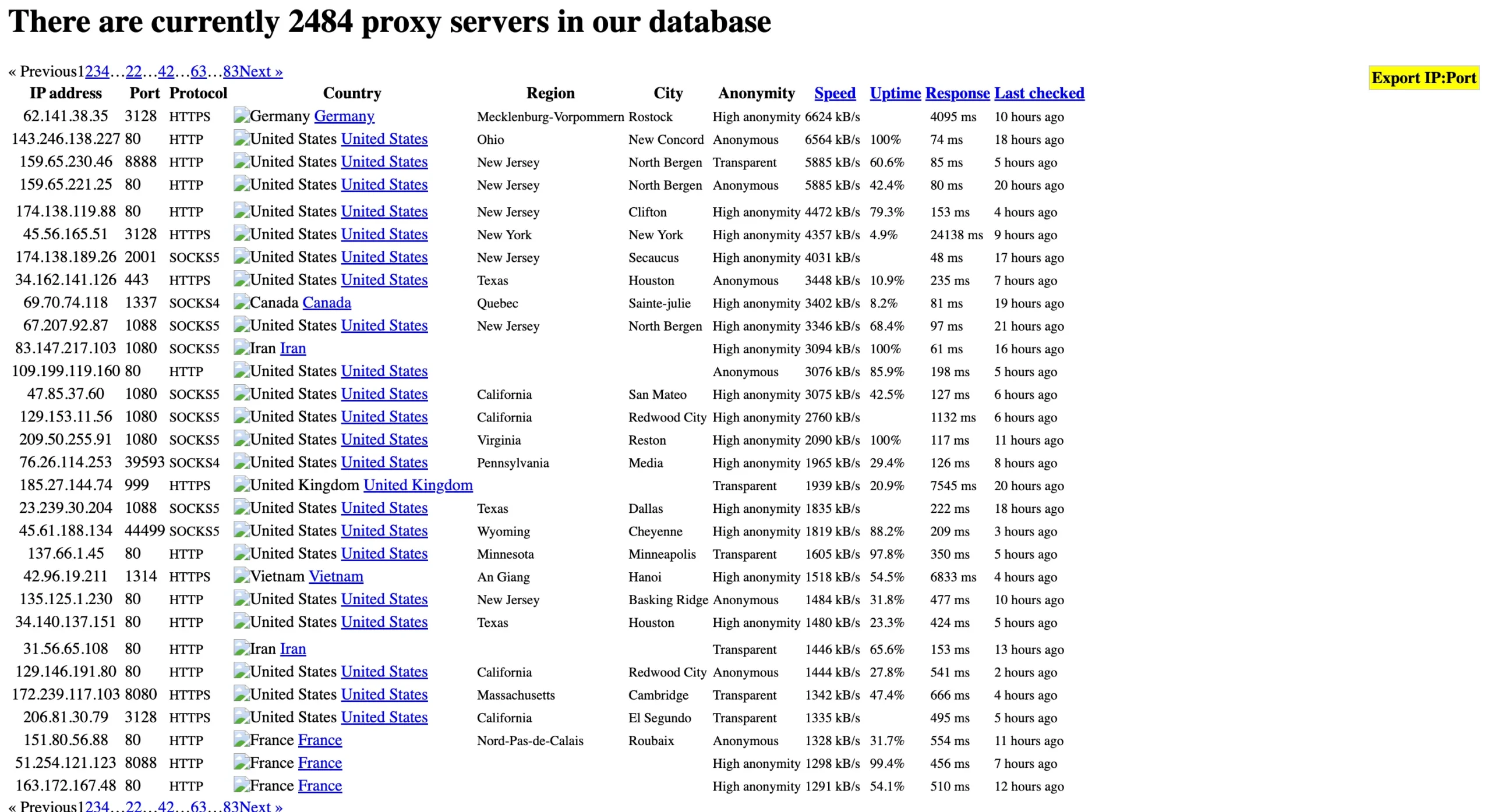
Given the pool shrinkage, check the “last checked” column before pulling any proxy from here. On a smaller list, stale entries make up a larger share of what you’re looking at.
Pros
- Categorization by port, region, or city.
- Transparent last-checked timestamps.
Cons
- Pool size has dropped significantly since this list was last reviewed.
- Sub-lists are alphabetized only, with no additional sort options.
13. Free Socks List
Free Socks List focuses exclusively on SOCKS5 proxies, checked every minute and dropped from the list the moment they stop responding. It labels each proxy with one of three anonymity tiers — Elite+, Elite, or Anonymous — rather than the more common transparent/anonymous/elite split, and shows country, state, city, and even time zone per proxy.
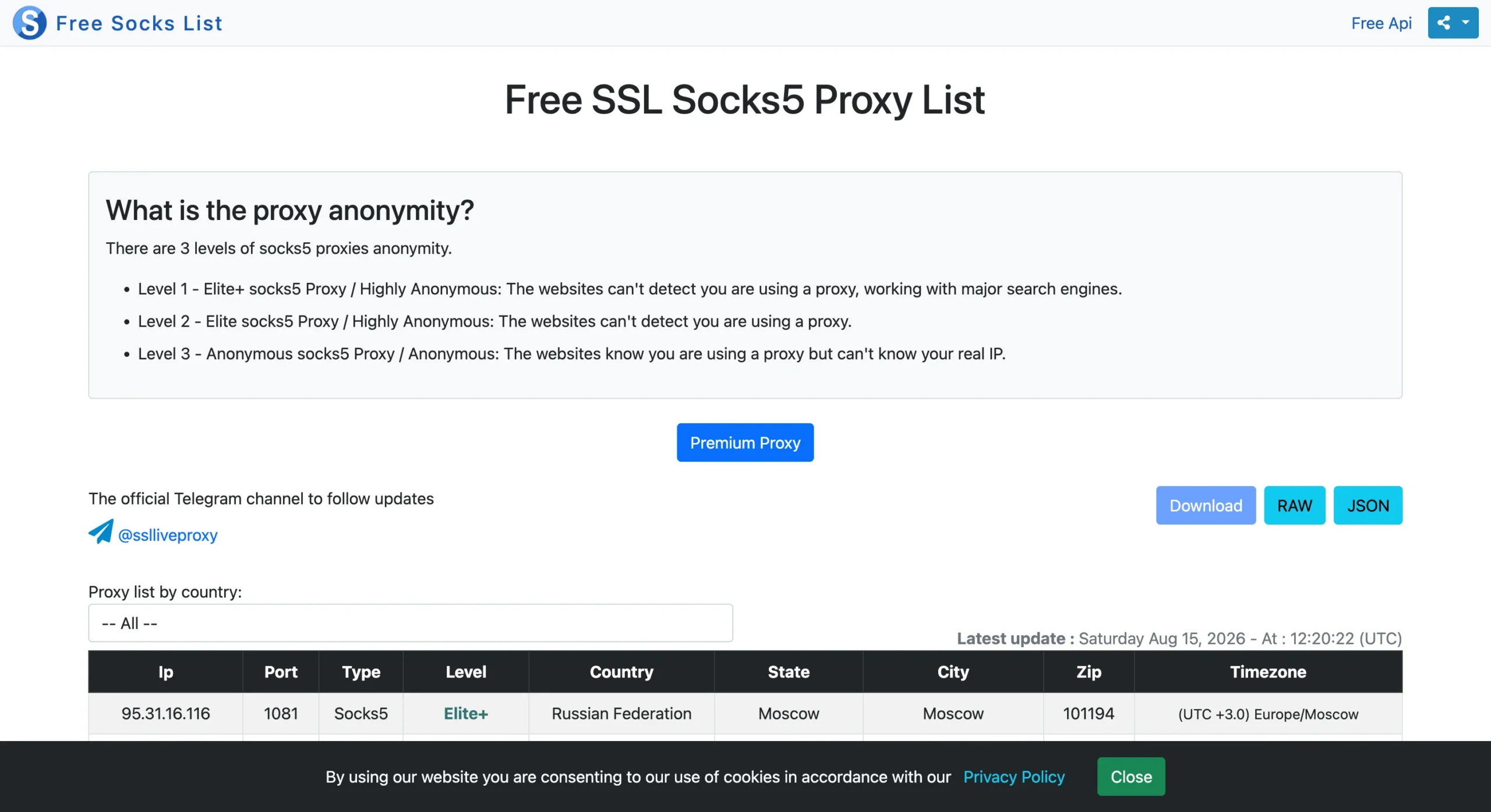
Use the free API instead of scraping the table: https://sockslist.us/Api?request=display&country=all&level=all&token=free returns the list as JSON, filterable by country and anonymity level.
Pros
- Checked every minute; dead proxies are removed automatically rather than just flagged.
- Free API and raw/JSON downloads, no signup required.
- Three-tier anonymity labeling (Elite+, Elite, Anonymous) is more granular than most free lists.
Cons
- SOCKS5 only — no HTTP or HTTPS proxies, so it won’t fit every scraping setup.
- No per-proxy speed or uptime history, only a live snapshot.
Free trials from paid proxy providers
These aren’t open lists. Each of the five below is a full paid proxy network that also offers a free trial or a small free allowance, meaning you get real residential, datacenter, or ISP proxy access, gated behind a signup rather than handed out publicly.
Decodo
Decodo (formerly Smartproxy) offers a free trial across residential, static residential, ISP, and mobile proxies, plus a Web Scraping API. Its network now includes 115M+ proxies across 195+ countries (updated from 65 million), with targeting down to country, state, city, ASN, and ZIP code.
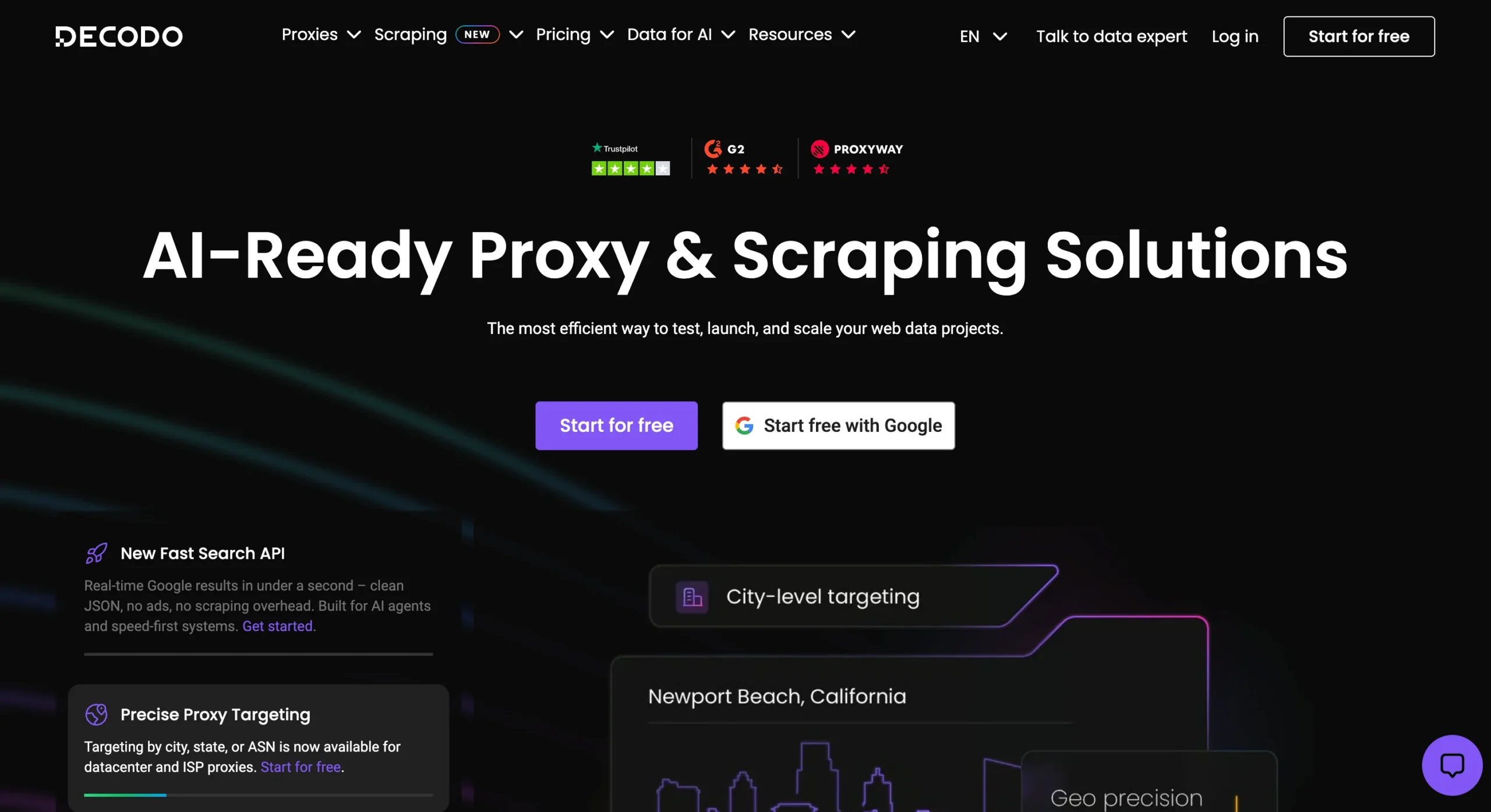
The 3-day, 100MB trial is small, so point it directly at your real target site from day one rather than a generic test URL. You won’t have enough allowance to waste on exploration.
Pros
- Easy setup.
- 115M+ IPs across 195+ countries.
- Covers residential, static residential, ISP, and mobile proxy types.
Cons
- The free trial is short: 3 days and 100MB by Decodo’s current terms, not open-ended.
Bright Data
Bright Data is a broader data infrastructure platform that includes free proxy access with no credit card required. It handles CAPTCHAs, renders JavaScript, and delivers structured JSON data alongside the proxy layer.
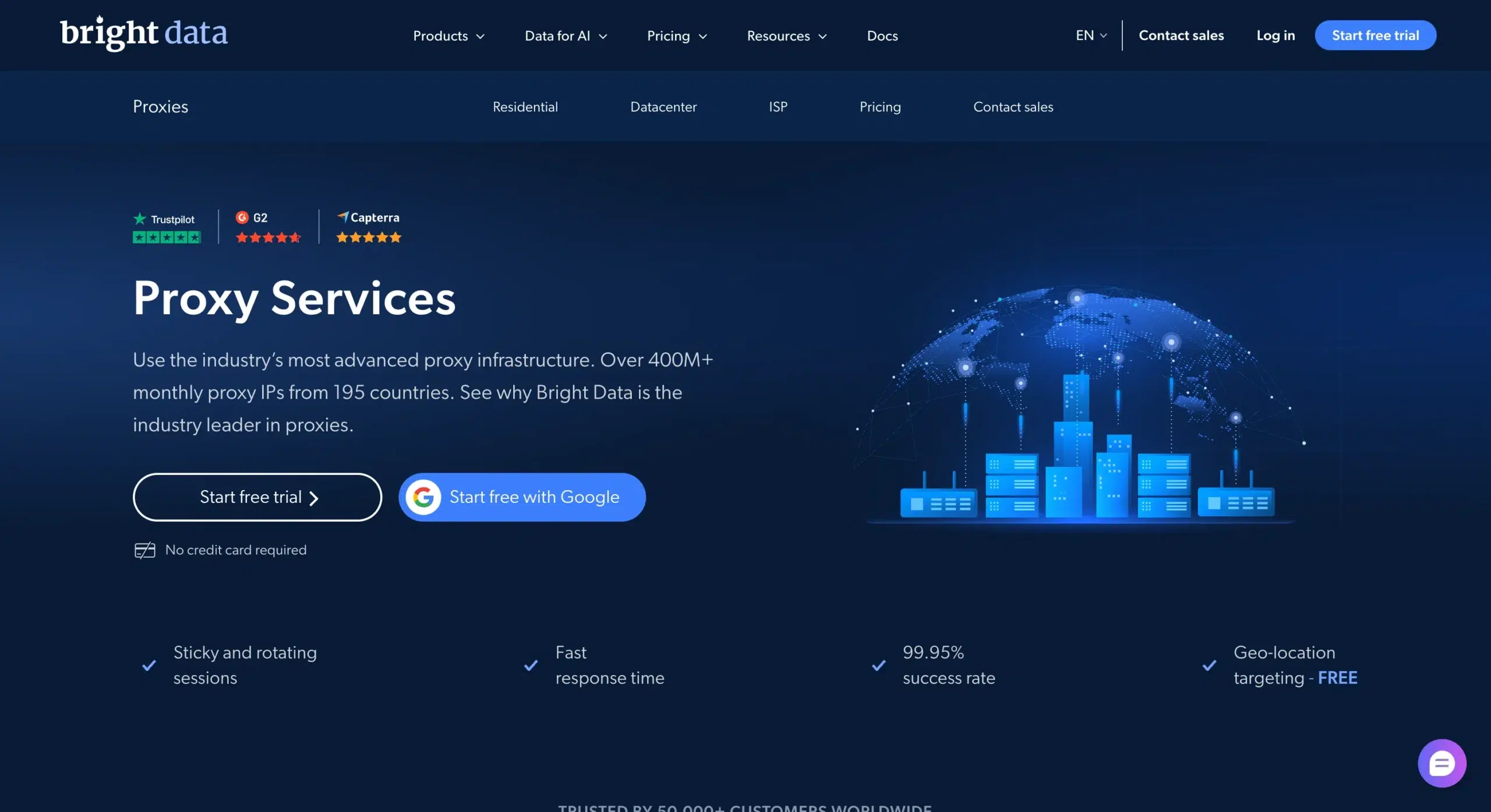
Use “Start free with Google” instead of the standard signup form. It skips several steps and gets you into the dashboard fastest.
Pros
- 400M+ residential IPs across 195+ countries, plus datacenter, ISP, and mobile networks.
- Precise geo-targeting to the carrier level.
Cons
- The full product suite is built for production-scale data collection, which may be more than a casual or one-off project needs. (Note: Bright Data’s own pages list its datacenter pool at different sizes in different places, 770,000+ in one, 1.6M+ in another; that inconsistency is on their end.)
IPRoyal
IPRoyal is currently ranked the #1 “best free proxy” pick in a major third-party 2026 ranking, offering datacenter, residential, ISP, and mobile proxies alongside a free list on its site, updated roughly every 10 minutes by IPRoyal’s own claim.
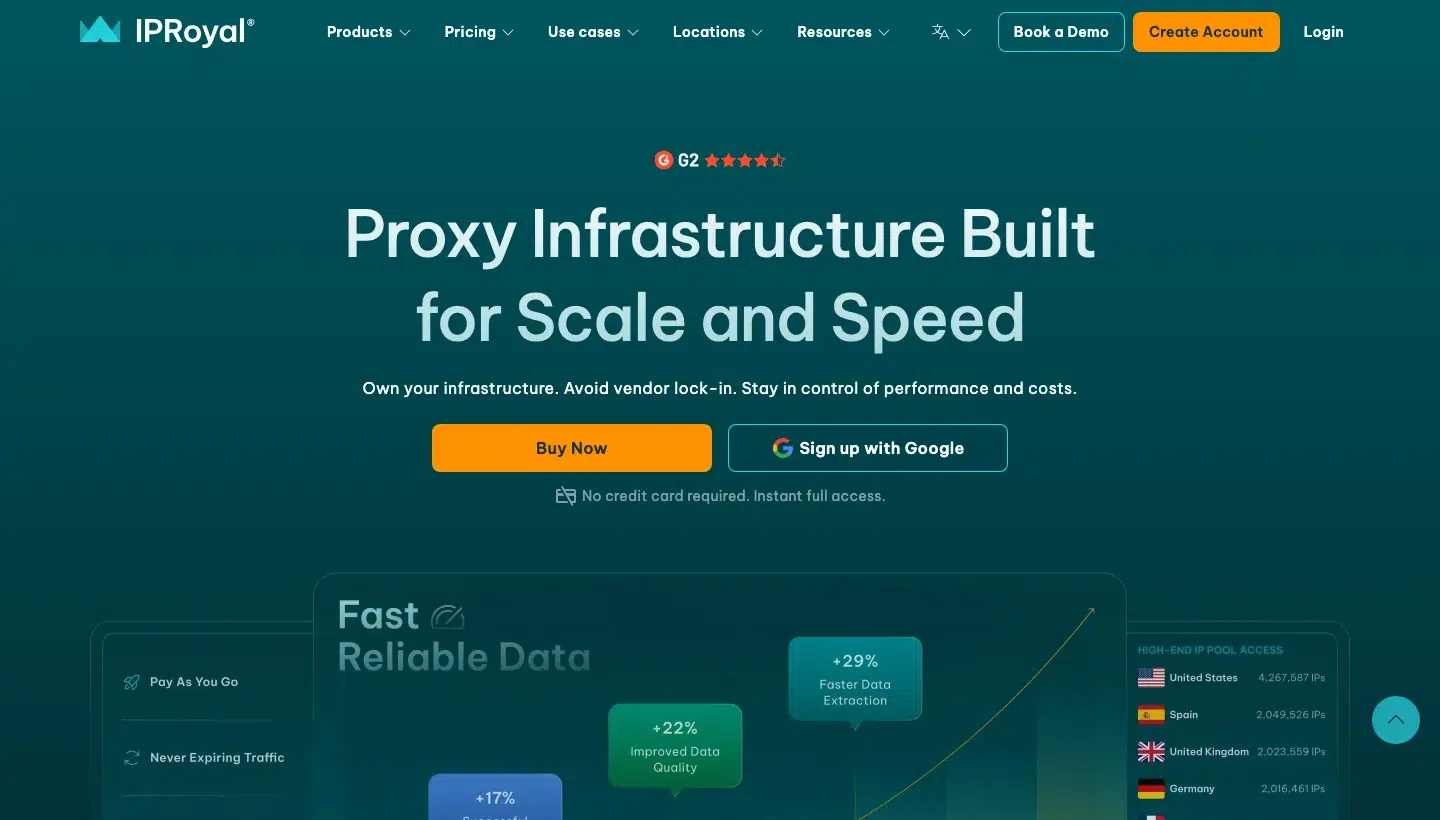
Verify that refresh-rate claim yourself before relying on it. This audit found more than one provider’s “updated every X minutes” tagline didn’t hold up under a live check, so don’t take it at face value here either.
Pros
- Versatile proxy types.
- 24/7 direct support cited as a strength in third-party reviews.
Cons
- Free-tier proxy speeds can run slow.
Webshare
Webshare appears alongside IPRoyal in the same third-party 2026 ranking as a leading free-tier proxy option, with a free plan offering a limited set of datacenter proxies.
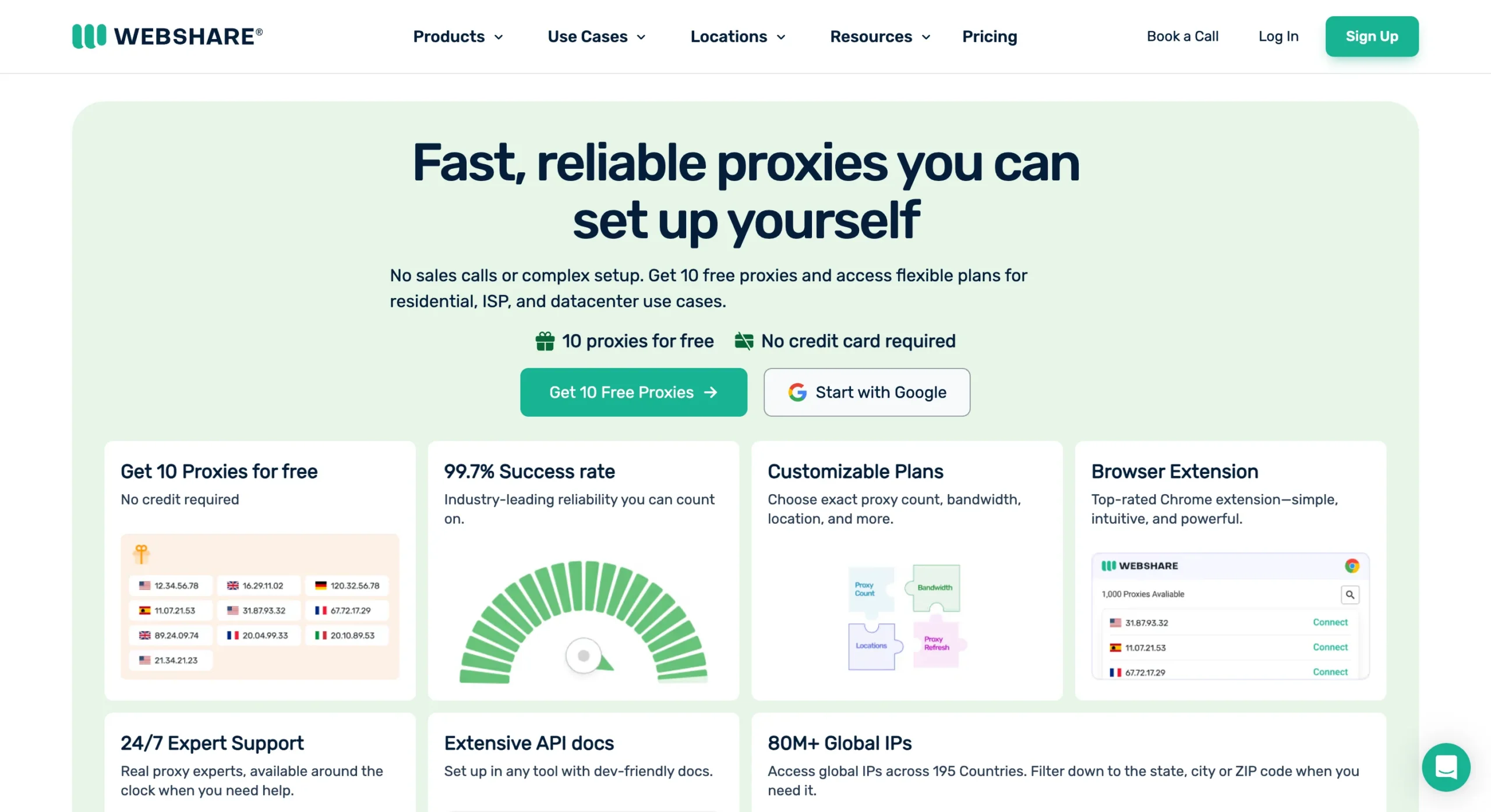
Confirm the current free-plan proxy count and bandwidth cap at signup rather than trusting a cached figure; free-tier limits on proxy providers change more often than their marketing pages get updated.
Pros
- Straightforward free tier for testing.
Cons
- Not independently verified in this pass, confirm current free-tier limits before publishing.
Oxylabs
Oxylabs rounds out the same third-party ranking, known primarily as an enterprise-grade paid proxy provider with a trial available on request.
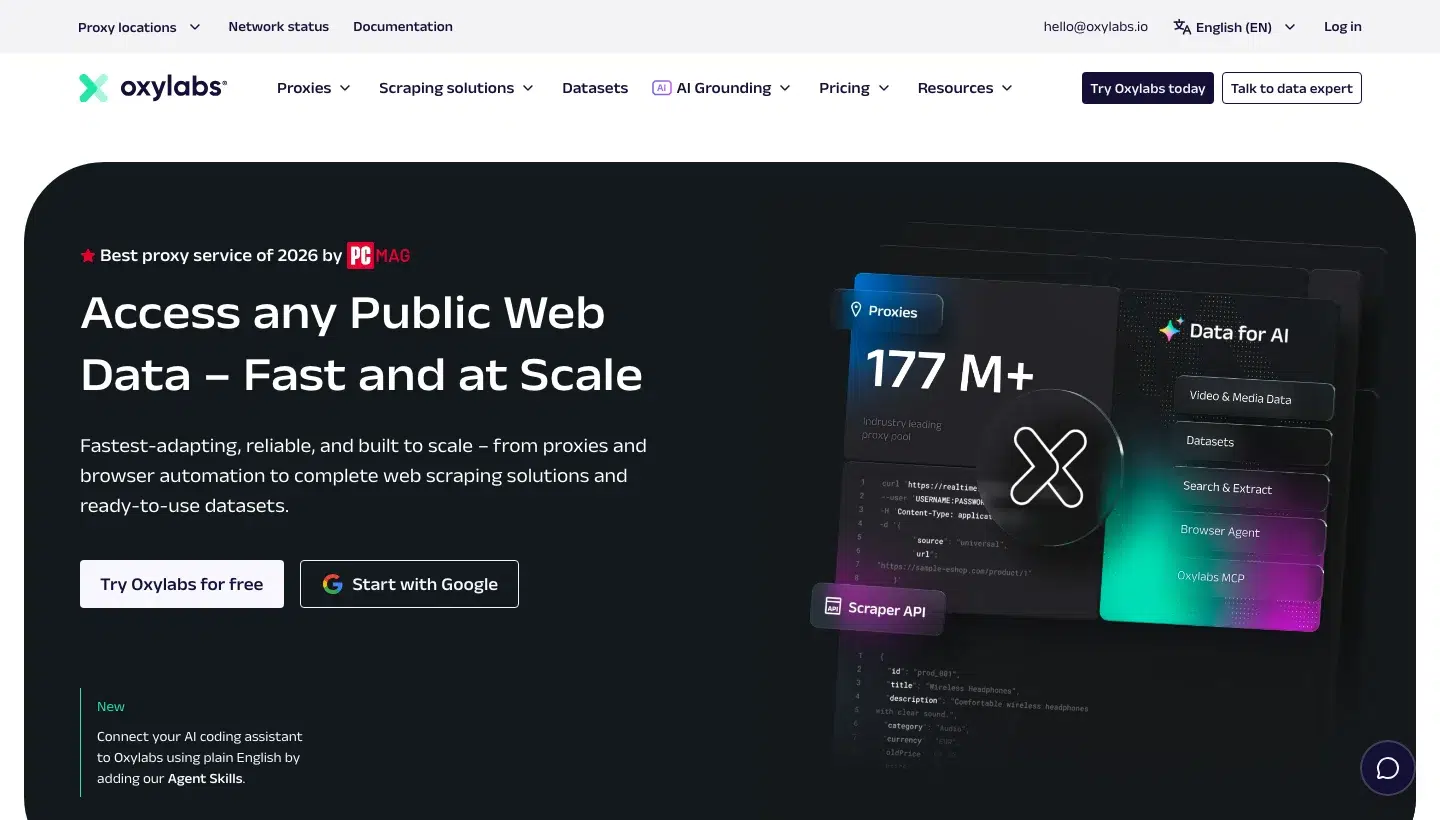
Have your target sites, expected request volume, and use case ready before submitting the contact form. Sales-gated trials move faster when you’re specific instead of asking for general access.
Pros
- Large, well-regarded residential and datacenter pools.
Cons
- Free trial requires filling in a contact form rather than instant self-serve access.
Free credits from managed scraping APIs
If an open list is too unreliable and a paid provider’s trial is too short, the last category skips proxies entirely: you send a URL to an API, and rotation, CAPTCHA handling, and JavaScript rendering happen behind it. None of these hand you raw IP:port access. All of them are free to start.
ScraperAPI
ScraperAPI handles proxy rotation, CAPTCHAs, JavaScript rendering, and scheduled scraping jobs behind a single API call, backed by a network of over 40 million proxies across 50+ countries. Its own technical documentation states an average success rate of about 98%, with 1 to 3% of requests expected to fail; that’s the number to use, rather than the 99.99% figure that circulates on some marketing pages without documentation support.
On IP pool size and geotargeting specifically, a widely cited comparison has criticized ScraperAPI for a “small IP pool” and “limited geotargeting” relative to dedicated proxy networks. Worth addressing directly: ScraperAPI’s proxy layer is intentionally managed rather than exposed, so you’re trading direct pool-size control for automatic, ML-assisted IP selection per request; if you need to hand-pick specific IPs or granular city-level targeting yourself, a dedicated proxy network is the better fit, and that’s a genuine trade-off rather than a gap to paper over.
A 7-day free trial includes 5,000 API credits. After that, a forever-free plan provides 1,000 credits, or upgrade to a paid plan starting at $49/month for 100,000 credits.
If you already have proxy-based code, switching takes one line: point your existing proxy config at http://scraperapi:YOUR_API_KEY@proxy-server.scraperapi.com:8001 instead of a raw IP:port, and rotation/CAPTCHA handling applies automatically.
Pros
- 40M+ IPs across 50+ countries.
- Automatic rotation across datacenter, residential, and mobile IPs.
- Built-in JavaScript rendering.
- Structured data endpoints for Amazon, Google, and Zillow; forever-free plan with 1,000 credits.
Cons
- Built for heavier, larger-scale scraping rather than lightweight one-off requests.
- Less direct control over individual IP selection than a raw proxy network.
ScrapeOps
ScrapeOps is a proxy aggregator with free trial credits, routing requests across 20+ underlying proxy providers rather than running its own pool from scratch, so it automatically picks whichever provider performs best for a given target domain.
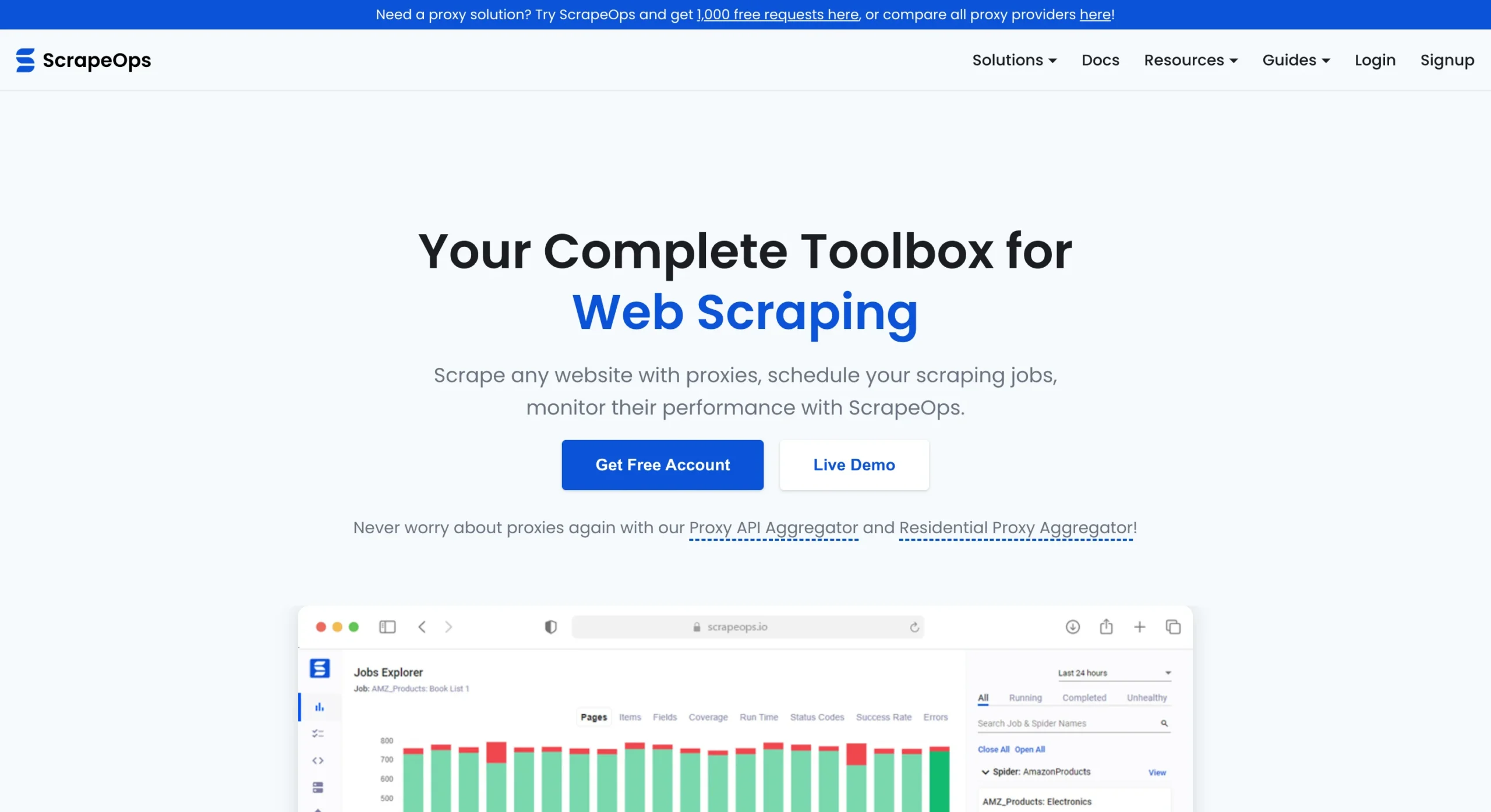
The same free account unlocks two separate allowances: 1,000 free requests on the Proxy API Aggregator, and 100MB free on the Residential Proxy Aggregator. Sign up once, use whichever fits the job.
Pros
- Aggregates multiple providers behind one integration.
- Picks the best-performing provider per domain automatically.
Cons
- Free tier is trial credits, not an ongoing free allowance.
Apify Proxy
Apify Proxy is bundled into Apify’s platform, which includes $5/month in free credits usable toward datacenter, residential, or Google SERP proxy types.
Pricing splits by proxy type: datacenter from $0.6/IP, SERP from $7/IP, residential from $8/GB, so match the type to your actual target instead of defaulting to the most expensive residential tier.
Pros
- Proxy access sits inside a broader platform with 2,000+ prebuilt scraping “actors.”
Cons
- The $5/month credit allowance is small if proxy usage is your main cost driver.
Scrapeless
Scrapeless positions itself against “free forever” open-source scraping stacks, arguing that a managed free tier costs less in engineering time than gluing together open-source tools yourself.
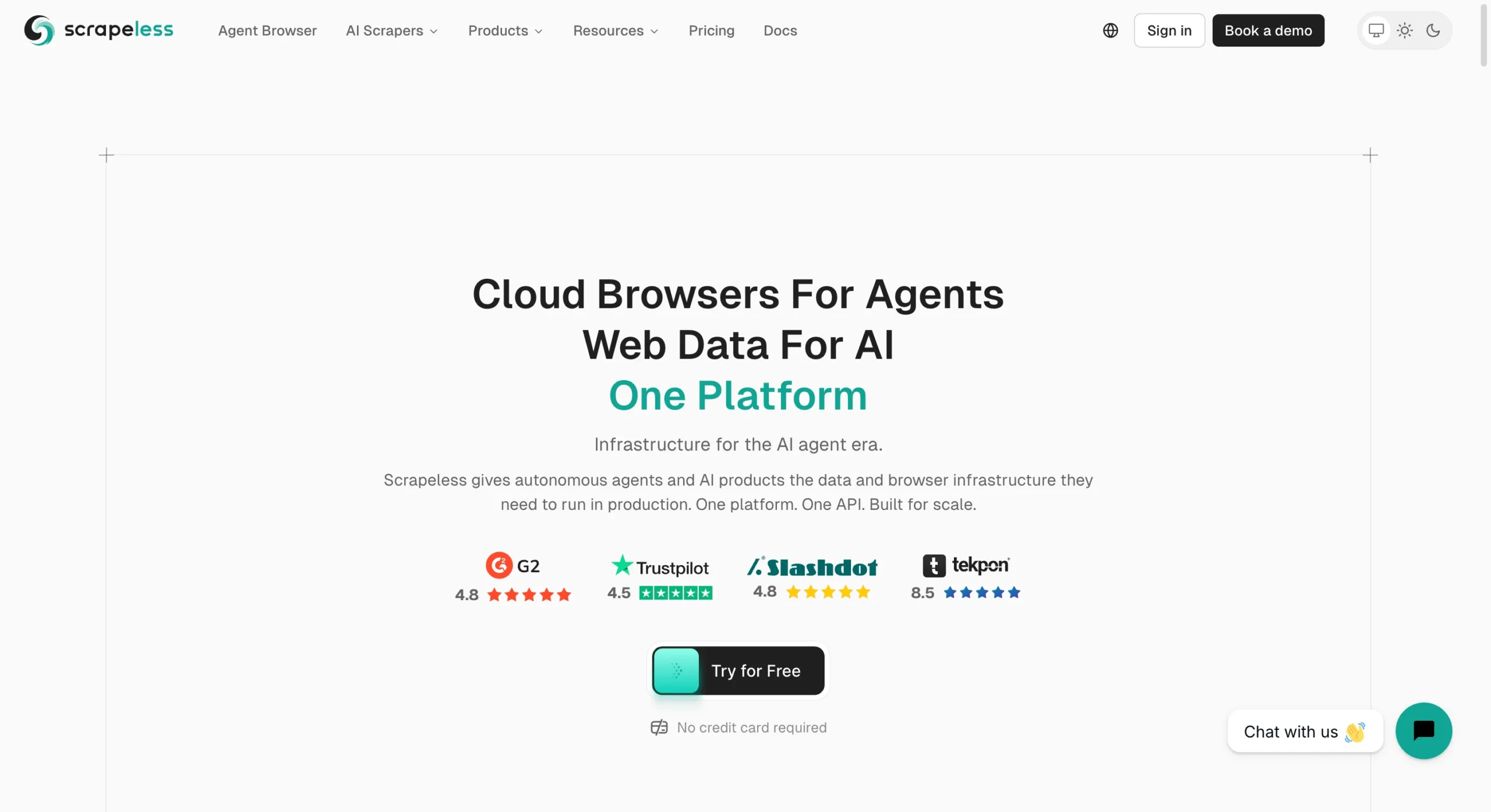
The free trial signup is explicitly no-credit-card, so it’s safe to test end-to-end before deciding, rather than a “free trial” that actually wants billing details upfront.
Pros
- Lower setup effort than a self-managed open-source stack.
- No credit card required for the trial.
Cons
- A newer entrant with less independent track record than the more established names on this list.
Why free proxies are a security risk
Most coverage of free proxies stops at “they’re slower and less reliable.” That undersells the real issue: a proxy sits directly in the path of your traffic, and a free one is operated by someone you generally can’t verify.
Three concrete failure modes matter here:
- Interception: unencrypted traffic routed through a free proxy can be read in full by whoever operates it.
- Injection: a proxy can alter the response before it reaches you, including changing scraped values like prices, without any visible sign that it happened.
- Identification: shared, heavily reused free IPs get flagged fast, and your requests can be lumped in with other users’ abuse on the same address.
The data backs this up. A 30-month study by researchers at Inria, CNRS, and DataDome tracked more than 640,000 free proxies pulled from 11 public proxy lists. On a typical day, only about 3% of them actually worked, and of those that did, just 2.5% supported HTTPS, leaving nearly all traffic unencrypted. The researchers also caught 16,923 proxies altering the content they delivered. Separately, a peer-reviewed NDSS study of 65,000 open proxies found that more than 38% of working proxies modified content in some way.
The bigger problem is where many of these proxies come from. When the researchers checked the proxies’ IP addresses against the Shodan security database, they found 4,452 distinct known vulnerabilities, including 1,755 that let attackers run unauthorized commands on the device. Many of the proxies ran on home routers and even security cameras. The researchers’ conclusion: many free proxies are likely compromised devices rather than services anyone set up on purpose. In other words, when you use a free proxy, your traffic may be passing through someone’s hacked router.
Even proxy providers themselves acknowledge this: Geonode’s own free proxy list page states plainly that free public proxies “may log traffic, inject ads, or be honeypots,” and recommends never sending sensitive data through them.
For quick, low-stakes testing, that risk may be acceptable. For anything involving real business data, credentials, or production scraping, it’s a genuine reason to move to a paid provider or managed API, not just a reliability argument.
Proxy scraper: free tools vs. a managed API
A proxy scraper collects public IPs from open lists like the ones above, tests each one, and returns only the proxies that respond. It saves you from copying rows off a web table by hand.
If you want to proxy scrape free of charge, open-source scripts on GitHub pull from sources like ProxyScrape, Free Proxy Lists, and Geonode, then export a working proxy server list. A proxy scraper free script like this is fine for learning and one-off tests, but it inherits every weakness of the underlying lists: short lifespans, little HTTPS support, and the security risks covered above.
A managed option works differently. ScraperAPI finds, rotates, and retires proxies for you behind one API call, so you never handle raw IPs, and its forever-free plan (1,000 credits) lets you test it on your real target first.
Why is ScraperAPI a strong option once free proxies stop being enough?
ScraperAPI pairs a managed, rotating proxy pool with built-in web scraping tools, rather than handing you a raw list of IPs to manage yourself. It automatically selects clean IP addresses from its 40M+ proxy pool, aiming to bypass common anti-scraping defenses even on heavily protected sites.
That matters because every free proxy list eventually hits two limits. The addresses are public, which makes them easy for target sites to detect, throttle, or block outright. And even the proxies that work at first stop working as your request volume climbs. As sites deploy more advanced anti-scraping measures, standard free proxy lists become less reliable over time. This option fills that gap rather than competing directly.
The free tier covers 5,000 API credits on a 7-day trial, with US, EU, and select Asian geotargeting, JavaScript rendering for dynamic, JS-heavy sites, and anti-scraping protection backed by a documented average success rate of about 98%.